
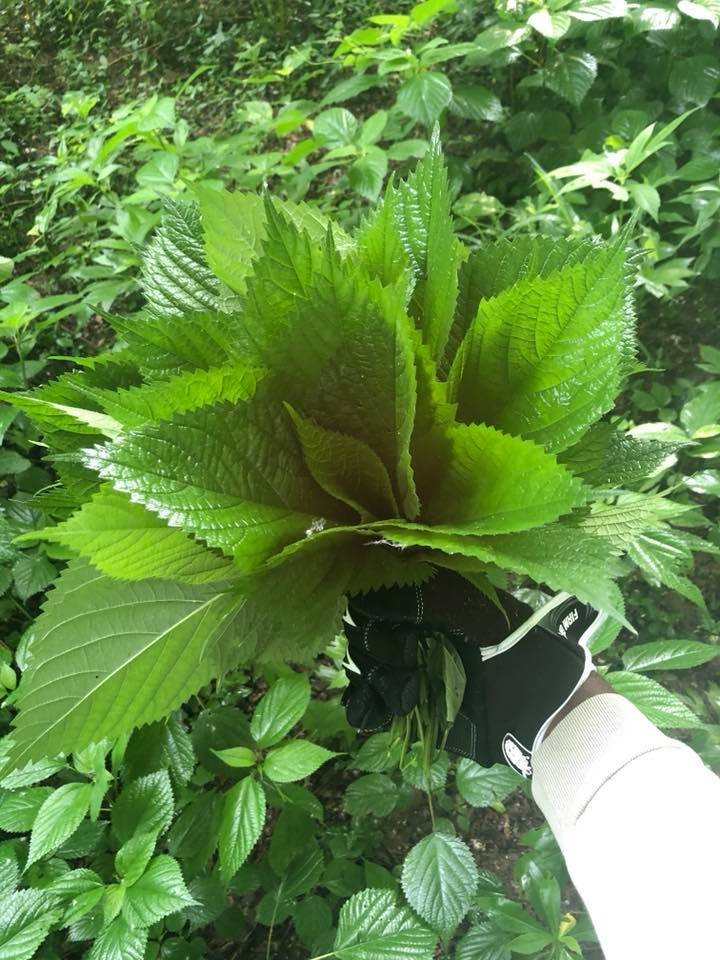
My personal daily rations of Native greens (75 grams).
Wood Nettle - Laportea canadensis - is a dominant, rhizomatous herbaceous species that grows most prolifically in the understory of floodplains where it out competes many other plants often representing 10-80% of the Herbaceous layer on many floodplain. It’s most dominant under towering Sycamores, Cottonwoods, American Elms, Silver maples, and Box elder Maples. It starts to loose dominance where there’s more sun exposure, giving way to more sun tolerant wildflowers.

I sautéed for the wood nettle for 5 minutes after heating up sunflower seed oil at high heat, then rolling the wood nettle leaves around in the crackling oil, then turning the heat down to low, covering with a top, and rolling the leaves/stems around once a minute. The heat destroys the stinging hairs that Wood Nettle, Slender Nettle, and other native nettles are known for; transforming these nutrition plants into an edible, great flavored vegetable. This is definitely one of the tastiest vegetable I’ve ever had.
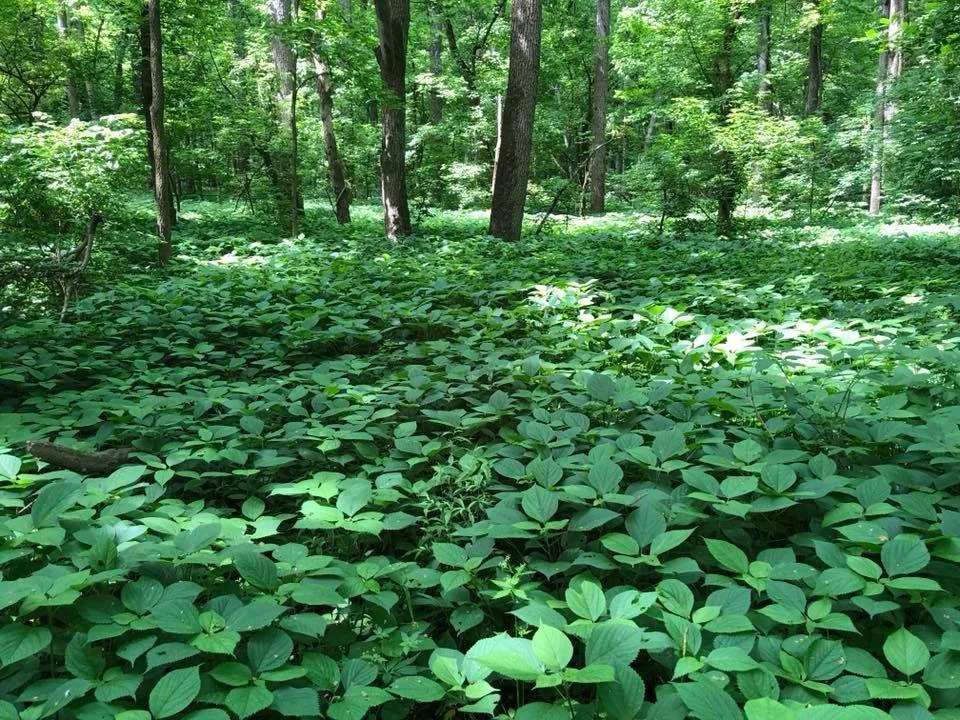
A bottomland/floodplain forest with a wood nettle dominant understory.
Bringing this plant into Native Plant Agricultural practice would require the restoration of bottomland and/or floodplain forests, with the canopy trees re-establishing the appropriate understory for woodnettle. There’s often forests already established on floodplains, and all that is needed is the removal and control of invasive shrubs and vines to reopen the sunlight in the understory. Other edible native understory plants that thrive in bottomland and floodplain forests are Great Waterleaf - Hydrophyllum canadense , Cut-leaf Coneflower - Rudbeckia laciniata, Anise Root - Osmorhiza longistylis, and Sweet Cicely Osmorhiza claytonii. In the sunnier areas of floodplain forests other wild edibles take root such as Sunchokes, Elderberry, Common Milkweed, and Slender Nettle.
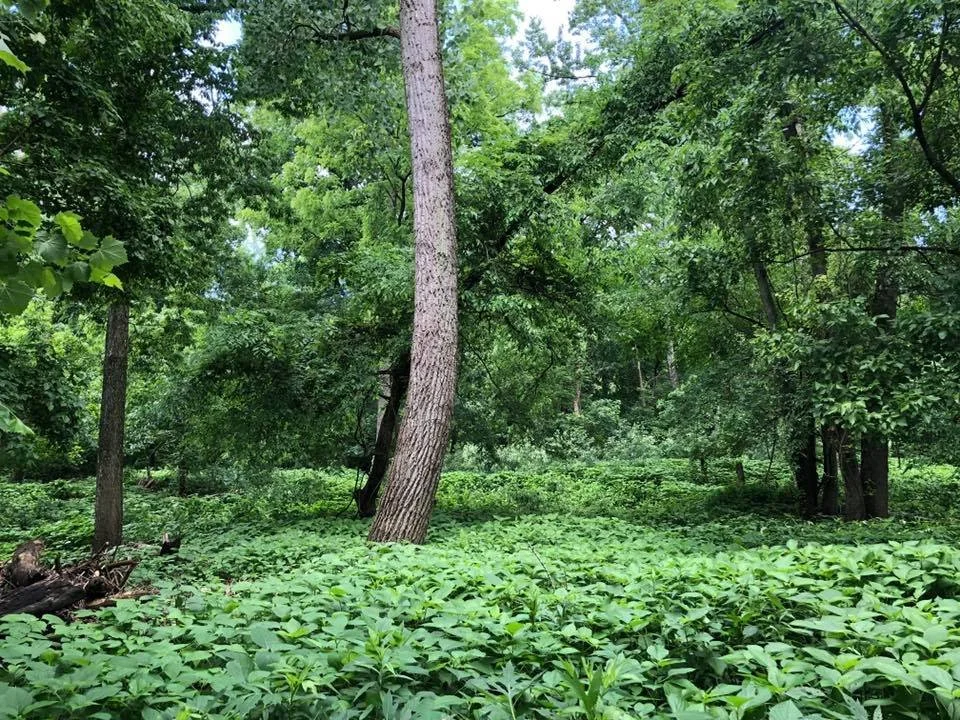
The restoration of floodplain forests isn’t only an opportunity for native plant agricultural expansion, but an improvement of biodiversity within one of our most removed ecosystems in the eastern half. of the United States. Floodplains have long been deforested to make way for livestock feed primarily of which livestock convert into harvested meat at rate of 1 to 3% (cow/beef), 10 to 11% (pig/pork), and 11 %to 13% (Chicken) representing a calorie loss of 87% to 99% (the inefficiency of raising terrestrial livestock) A more efficient, climate restorative, and ecologically restorative alternative is cultivating native understories under native flood plain canopy forests. Even the overstory trees on floodplains can produce crops of Yellowbud Hickory nuts, Pecans, Bur Oaks, and other nut bearing flood tolerant species.
To learn more about native plant agriculture, check out our free online book at: Lovenativeplants.com/ourbooks