
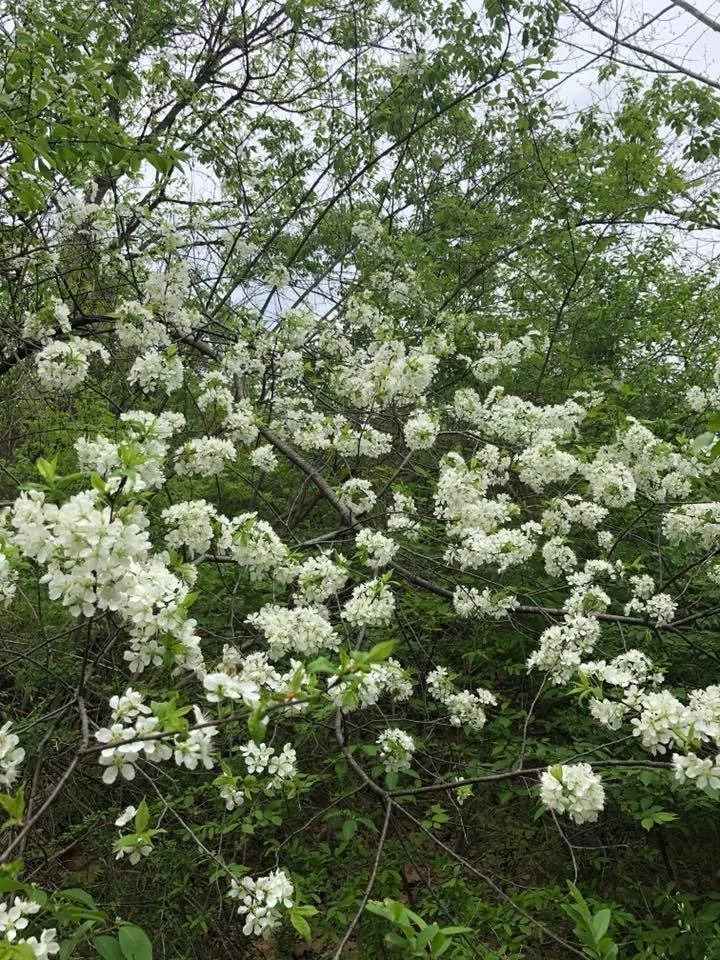
Some of the sweetest scented Wild plum blooms I’ve ever smelled, if you focus on the scent, it really just smells like plum-fruit.
We’d like to devote another post to raising awareness of the plight of our Native Wild Plum trees, which is a group species native throughout the U.S. that are in the same genus (Prunus) as Cherry, Agricultural Plums, Peach, and Almonds. When we say Wild Plums we’re referring to those indigenous to North America which have been here growing wild for millions of years and were most recently widely cultivated by Indigenous People of America.
One spring, we found one of the sweetest scented Wild plums we’d ever smelled; suffering from the fate we find most suffering from. This fate unfortunately is: being swallowed by invasive plants from all sides. The white blooms pictured here belong to a wild plum reaching out from a Honeysuckle thicket and without human intervention, it will be over grown and killed within 3-5 years.
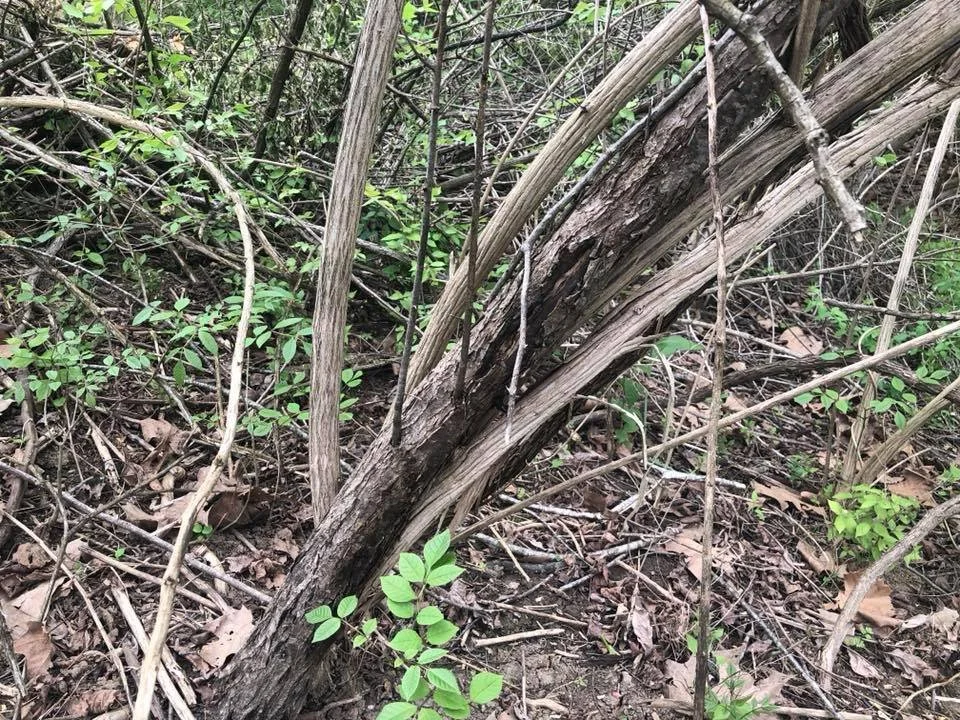
In the foreground we have two native black cherries, which are in the same genus as the wild plum which is in the background surrounded by honeysuckle trunks.
Wild Plums are possibly the most popular/visited plants in the spring with native pollinators, which helps it create often great flavored fruit about the size of or larger than large cherries June through September. The fruit drops to the ground when ripe. People have difficult experiences trying to grow Non-Native fruit trees, in part to non-native plants not being compatible with our ecosystems, leading to us having to spray them with compounds whether organic, mineral, or synthetic-chemical based. The native wild plum species have been producing fruit on this continent without the need for human tending for millions of years but now because of human disturbances they’re in need of human intervention.
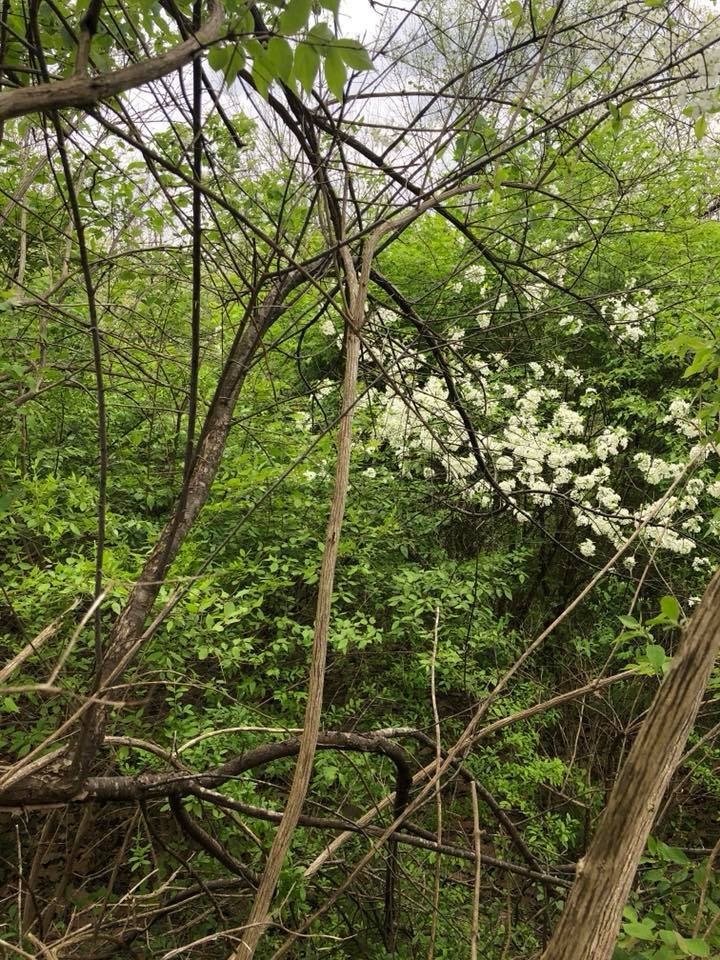
Caption: A Wild Plum species desperately reaching out from the invasive army of plants around it.
Due to the introduction of invasive shrubs like honeysuckle and Autumn Olive and invasive vines like Japanese Honeysuckle and Kudzu; Wild plum colonies struggle to survive within the sunny habitats it needs to produce fruit. Loosing Bear, Turkey, Wolf, Coyote, and fox from the landscape also hurts wild plums because these animals would eat these fruits in mass, spreading them far and wide. The loss/removal of Indigenous People’s land management has also lead to an incredible loss in population of Wild Plums.
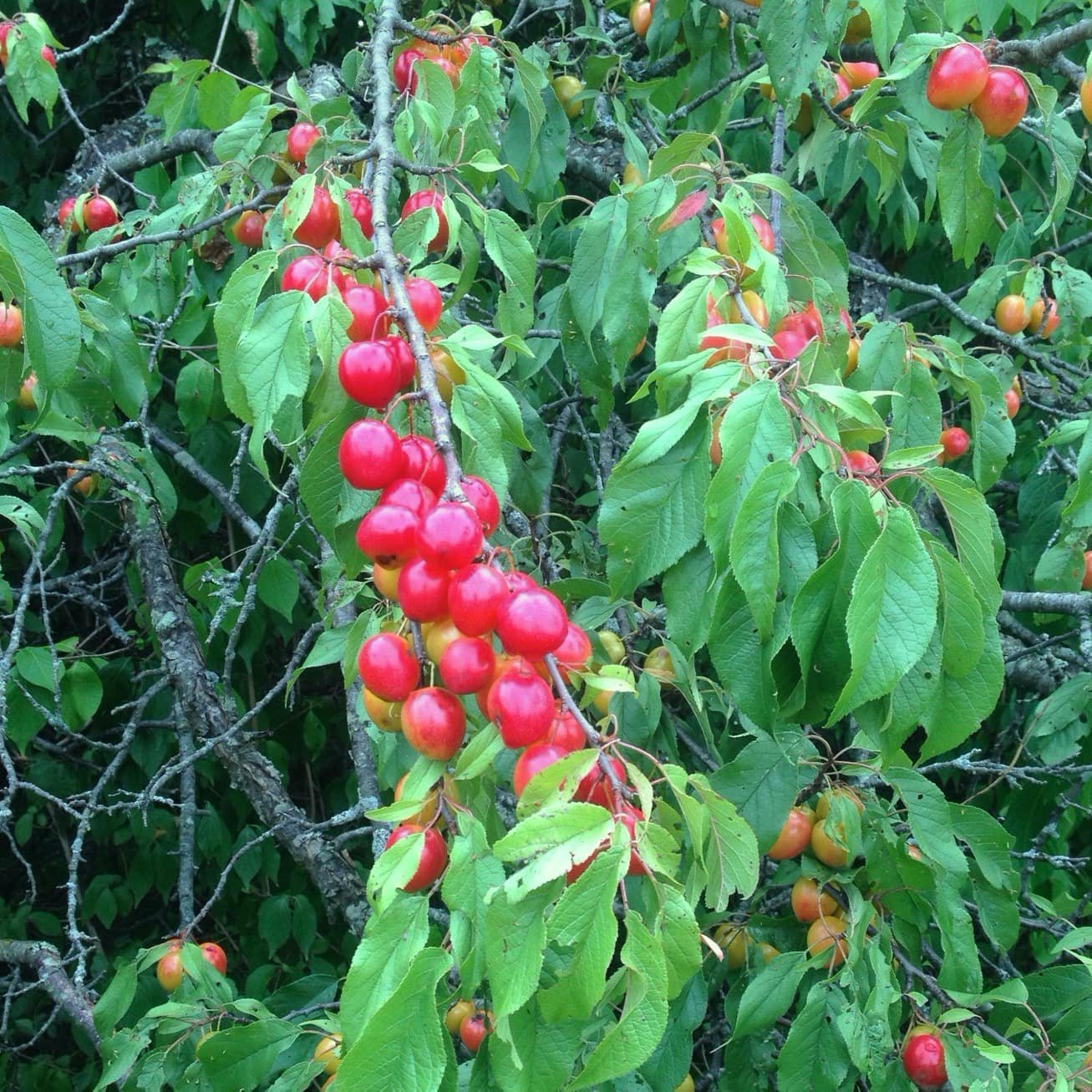
Prunus hortulana - Quapaw plum aka Hortulan Plum rippening in early August.
How Can you Help?
Humans can help by removing invasive plants from their property and planting new populations of wild plums. Wild Plums are shade intolerant so you’ll need to plant them on sunny wood edges or in complete full sun as they would be in their original grassland habitat. With humans harvesting the fruit and growing new thickets from the seeds, Wild plums can be restored in our local environments while offering humans a low-maintenance, fragrant, pollinator supportive, showy, and fun-flavored fruit tree that doesn’t suffer from the struggles non-native fruit trees experience trying to bear in our soils. Since these fruit have not been cultivated for hundreds of years, their nutritional density is also superior to cultivated fruits you find in the grocery store. When you taste a wild plum, store bought plums taste watery in comparison; these fruits range from sweet, to sweet-tart, to tart-sweet, and every colony has a slightly different taste.
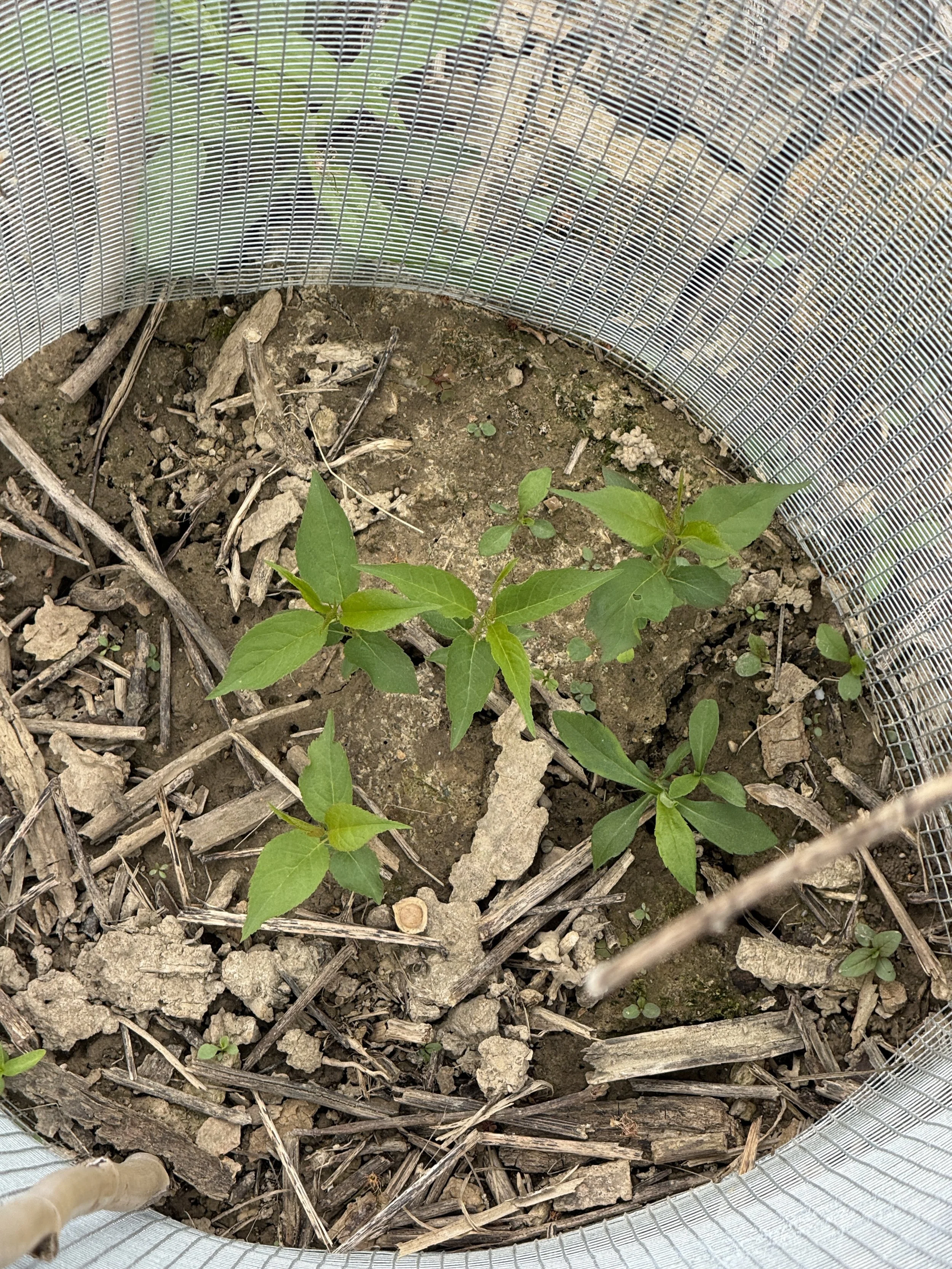
Direct Seeded Quapaw Plums - Prunus hortulana
The easiest way to grow wild plums if you have access to fruit/seed (A direct seeding Method):
Clear a circle shaped area about 4 feet in diameter of vegetation in a sunny area.
Eat the fruits and save the seeds inside; there’s 1 seed per fruit. The fruits are ripe anywhere from June to September depending on your region and the species of wild plum.
Plant the seeds about 1 inch under ground inside the circle shaped area you cleared of vegetation. Use 3 to 5 seeds per cleared area. Do this within a week of eating the fruit.
Purchase a roll of 4 foot tall of hardware cloth. Cut a 37 to 40 inch length piece for each cleared area and curl them into circles to act as fences. Zip tie the to ends together to lock the circle/column shape into place. These fences will keep rodents away from the seeds and grazers away from the future saplings. Use a stake that will last at least 3 years in the ground, and zip tie the hardware cloth to the stakes once the stakes are pounded in.
Tip: If you’re doing this in your front yard or some where aesthetically consequential - spray paint the hardware cloth a shade of green that matches the surrounding vegetation.
Pound landscape staples into the bottom row of the hardware cloth to secure it at ground level.
The seedlings will germinate the following spring, keep the area fairly weed free until then. The saplings will grow in place and you can thin the saplings out at the end of the first year of growth; saving the excess saplings per cage by putting them elsewhere once they have gone dormant after their first year of growth.
If you have people in your network that like fruit trees or ecology, consider sharing this post to help raise awareness about our native wild plum species.