
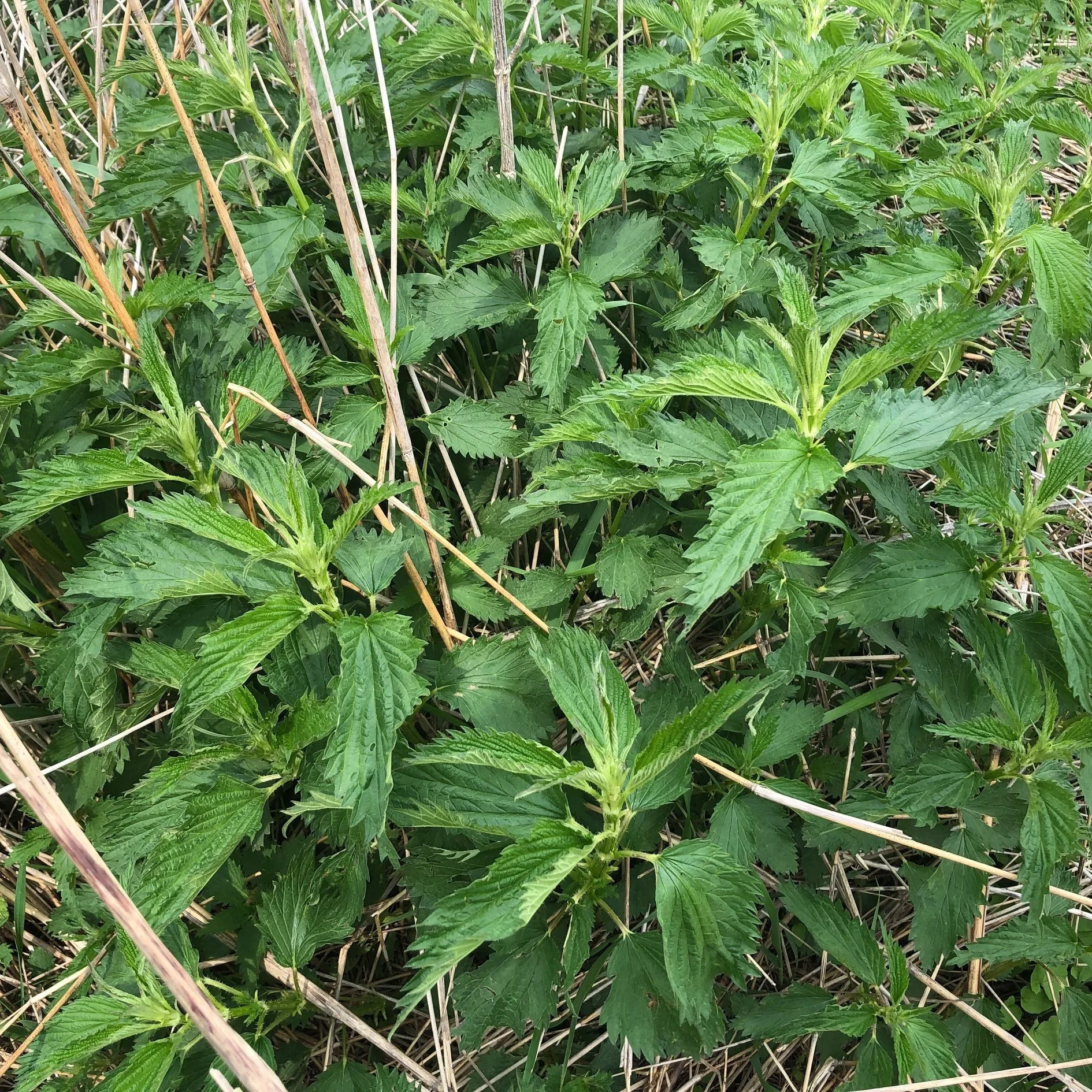
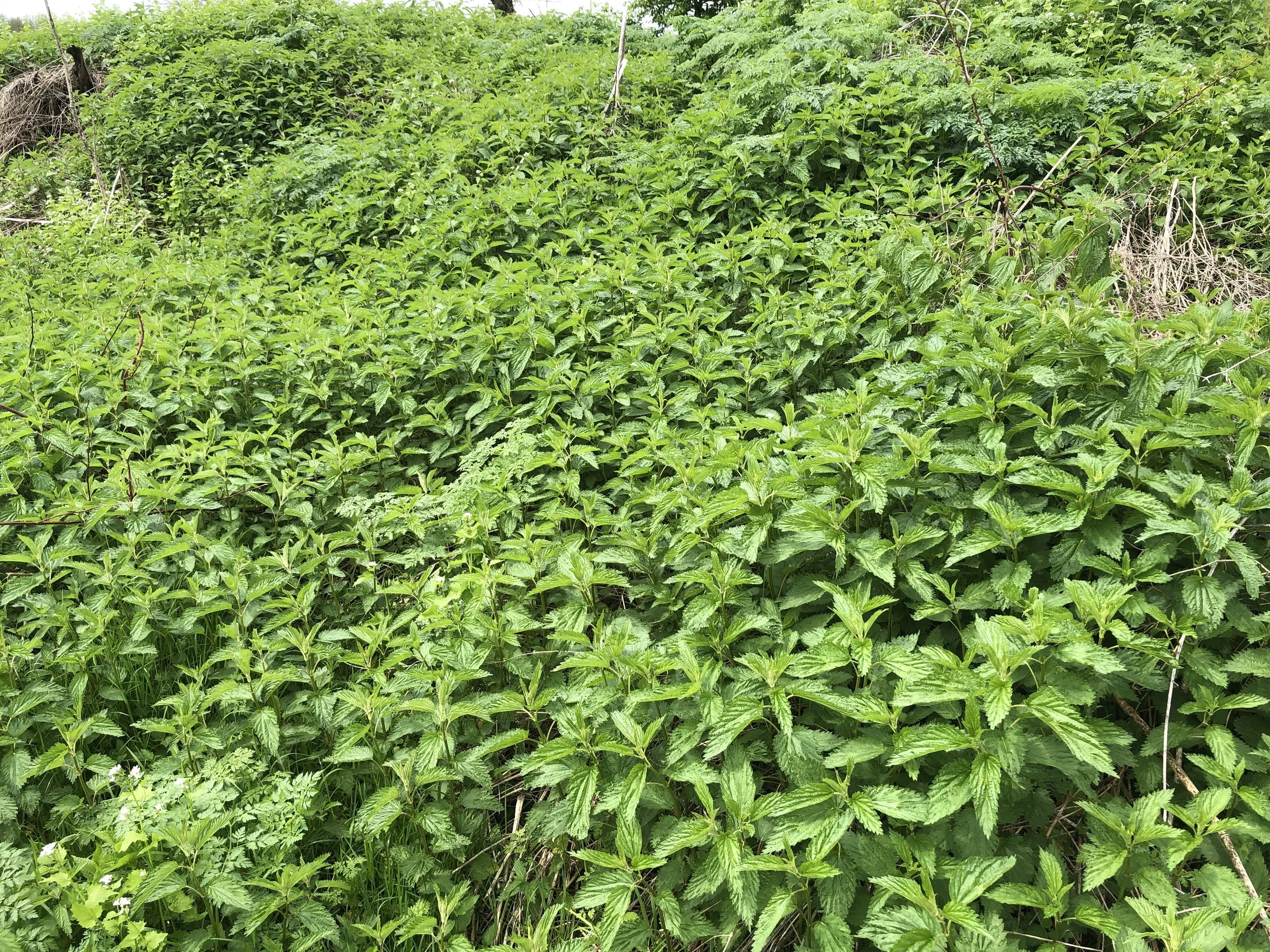
Slender Nettle emerges early in the spring and grows vigorously from underground runners known as rhizomes.
An Introduction to the United States’ Native Slender Nettle species - Urtica gracilis
Slender nettle is related to the non-native plant known as Stinging Nettle. Stinging Nettle is a common name referring to a European species that is shorter in height and has wider leaves than Slender Nettle. Our Native Slender Nettle has a slightly different leaf form and 35%-75% less stinging hairs than the European Stinging nettle. It is said these plants have superior nutrition to store bought leaf crops but nutrition data is sparse on Stinging Nettle and absent on its native counterpart; Slender Nettle.
Slender Nettle is adapted to somewhat dry slopes, moderate moisture conditions, and high moisture conditions. From prairies to wetlands to savannas to bottomland meadows, they can thrive as those are their natural niche. Their rhizomatous nature allows them to spread far and wide, only contained by mowing, other competitive plants, and dense shade.
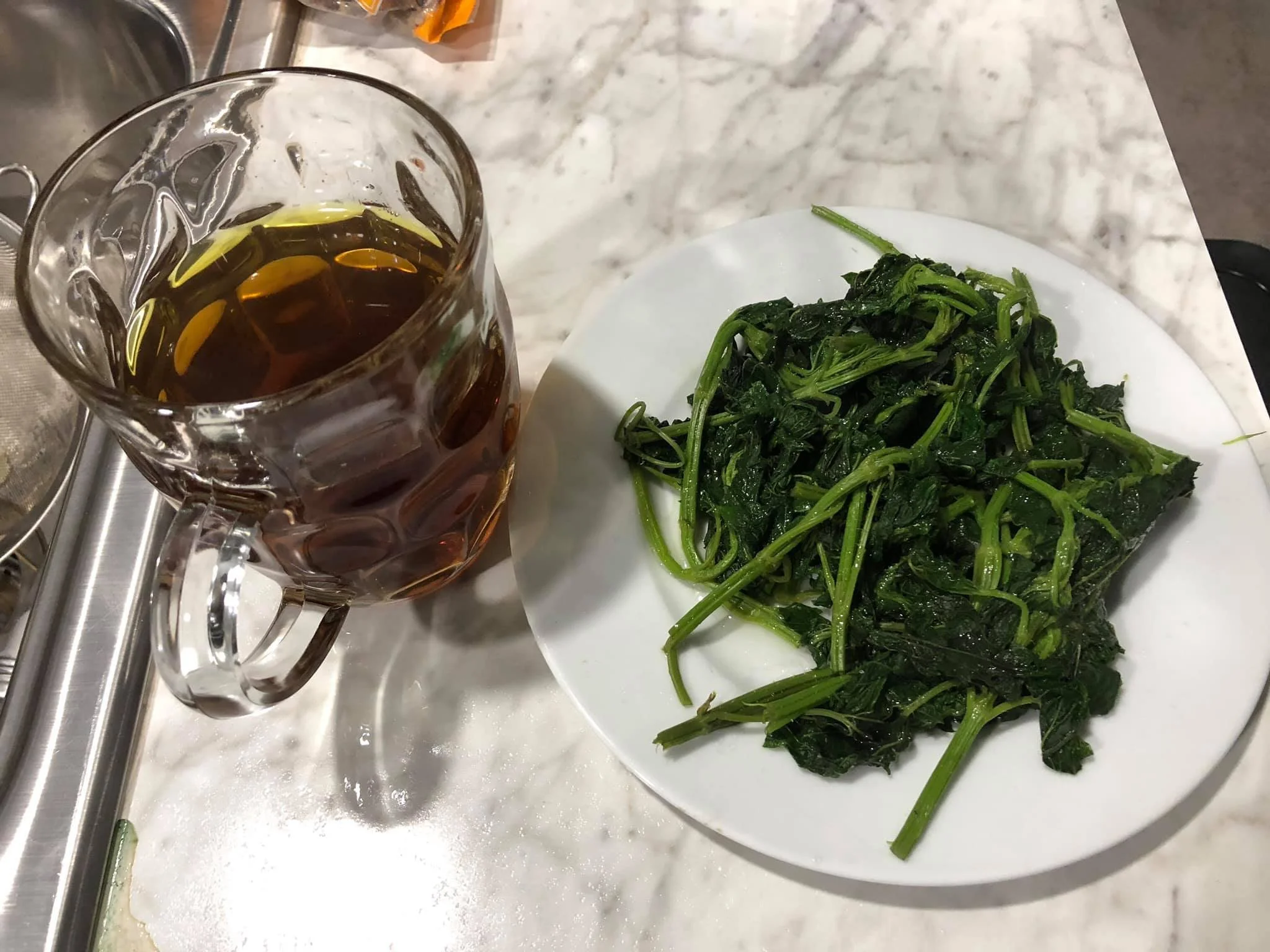
Growing SLender NEttle for Food and for Health
Slender Nettle begins growing early in the spring and could be ready for a first harvest by mid spring which in Zone 6 translates into the second week of May. Slender Nettle beds should be kept clear of most other competitive perennials as they will sometimes loose their advantage and vigor or it will complicate the harvest of the non-nettle plants because of the stinging quality. Slender nettle requires gloves to harvest if by hand. Depending on how fast the plant is growing, growth that is over 20 days old becomes fibrous and less useful as food, so later in the spring only the top 5 to 8 inches of the stem/leaf is harvested which will tenderize well once cooked. After the plants bloom mid summer (Zone 6 - July) nettle leaves shouldn’t be harvested as they begin to concentrate toxic compounds as the seeds are setting, therefore the season for Slender Nettle harvest is spring into early summer.
After Slender Nettle blooms the seeds are sought out by native rodents and birds so for maximum biological value nettle should be harvested no more than 1 time a spring. Also the more it’s harvested in one growing season, the more the plot will be invaded by other plants which is the case with any perennial plant. Harvesting Slender Nettle twice in one year is possible depending on the soil fertility, but it may prevent the nettle from blooming that year which lowers the biological value some.
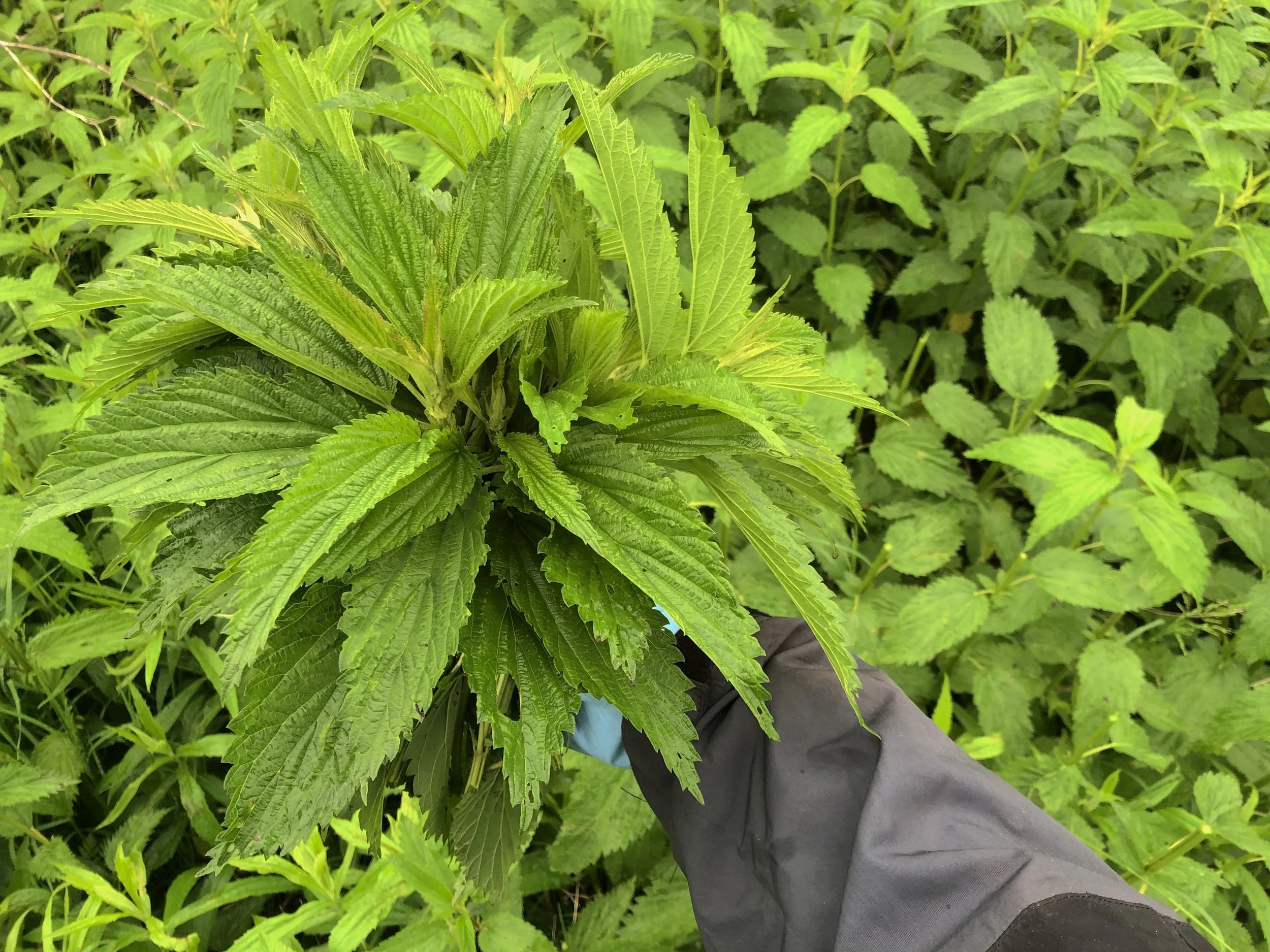
A glove as thin as a latex glove protects well enough while harvesting Slender Nettle.
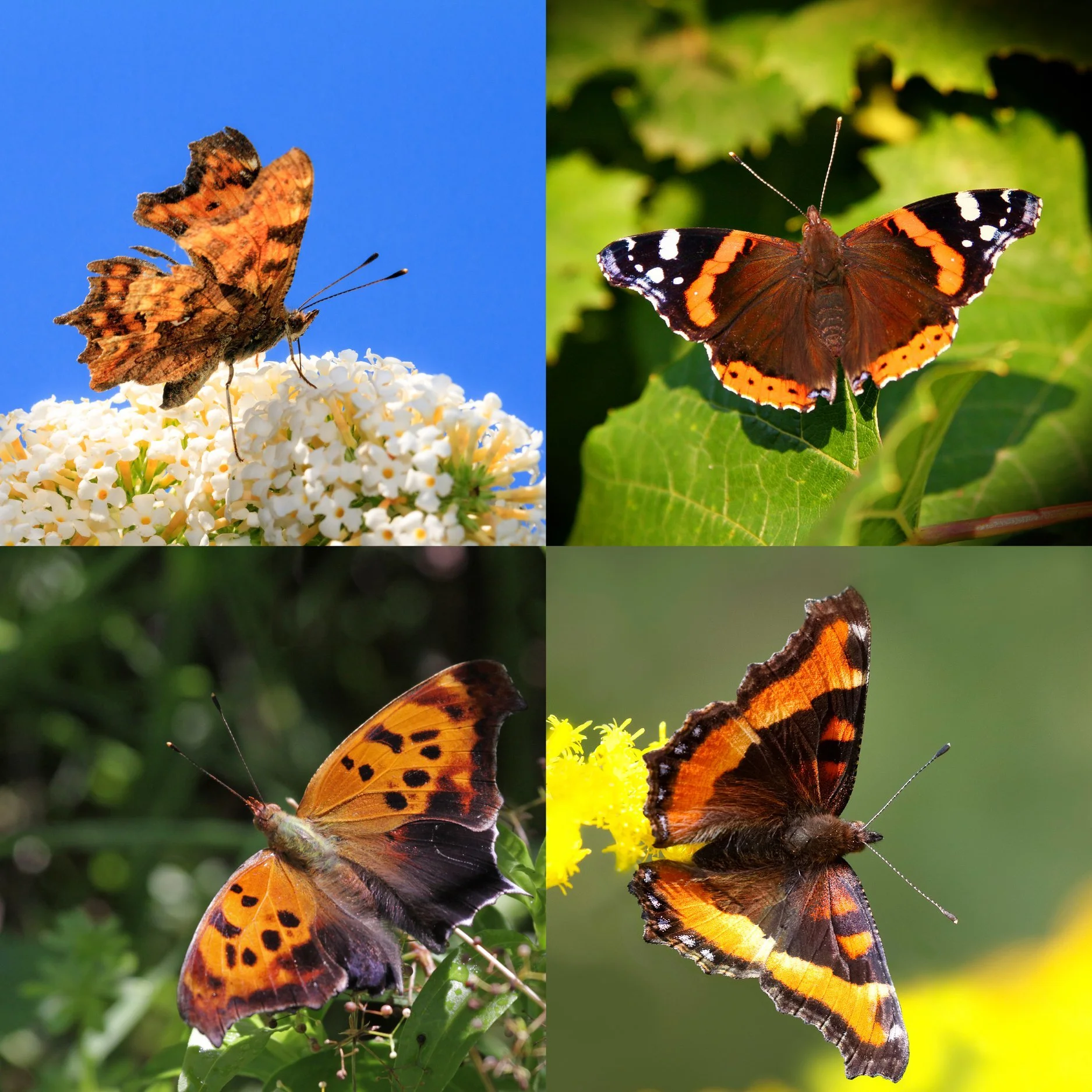
The Eastern Comma (Polygonia comma - top left), Red Admirals (Vanessa atalanta - top right), Question Mark butterflies (Polygonia interrogationis - bottom left), Milbert's Tortoiseshell (Aglais milberti - bottom right) all can use Slender Nettle as a host plant for laying their eggs to become caterpillars on.
Butterfly Attracting Abilities of Slender Nettle
Even though Slender Nettle is wind-pollinated and doesn’t produce nectar, it attracts many different species of butterflies as a host plant. The following species (Pictured above) lay their eggs on slender nettle to feed their caterpillar stage of life.
The Eastern Comma (Polygonia comma - top left) has been known to aggressively chase away insects or even birds while on tree trunks or other resting places for a female to show up. Comma caterpillars are solitary and tend to feed at night. Older caterpillars have been observed folding leaves over themselves and fastening it with silk to create a safe hiding place to feed.
Red Admirals (Vanessa atalanta - top right) are well-known for being "people-friendly", however their propensity for visiting and being unafraid of humans probably has more to do with their intense territoriality. Red Admiral females will not mate with males who don't have a territory, so males take care to defend their home. Individual territories are often about 8–24 feet long and 13–42 feet wide, and the male will circle the perimeter his domain many times an hour.
Question Mark butterflies (Polygonia interrogationis - bottom left) look similar to the other true brushfoot butterflies mentioned above when their wings are open and displayed, however they possess a unique adaptation they use to hide from predators. The backsides of the Question Mark's wings are colored like dead leaves, so that when they bring their wings together they disappear among leaf litter or seem to be a dead leaf on a branch.
Milbert's Tortoiseshell (Aglais milberti - bottom right) males will perch on slopes, logs, and hillsides in the afternoon while on the lookout for females. Eggs are laid in huge clusters, sometimes hundreds, on the underside of Nettle leaves. As Tortoiseshell caterpillars eat the host plant, they defoliate it from the top to the bottom, leaving only veins.
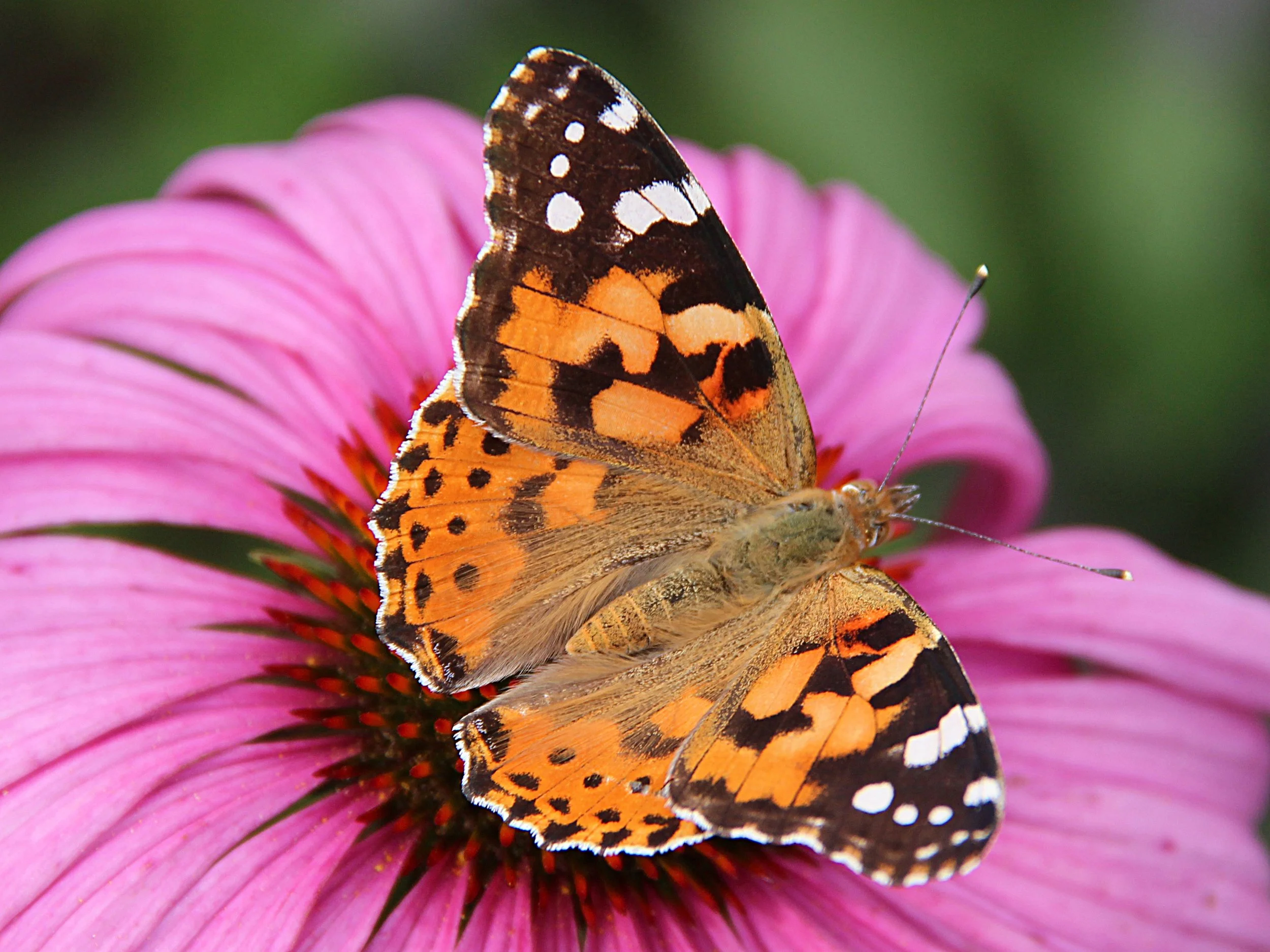
The Painted Lady Butterfly (Vanessa cardui) is also able to use Slender Nettle as a host plant for its caterpillar stage.
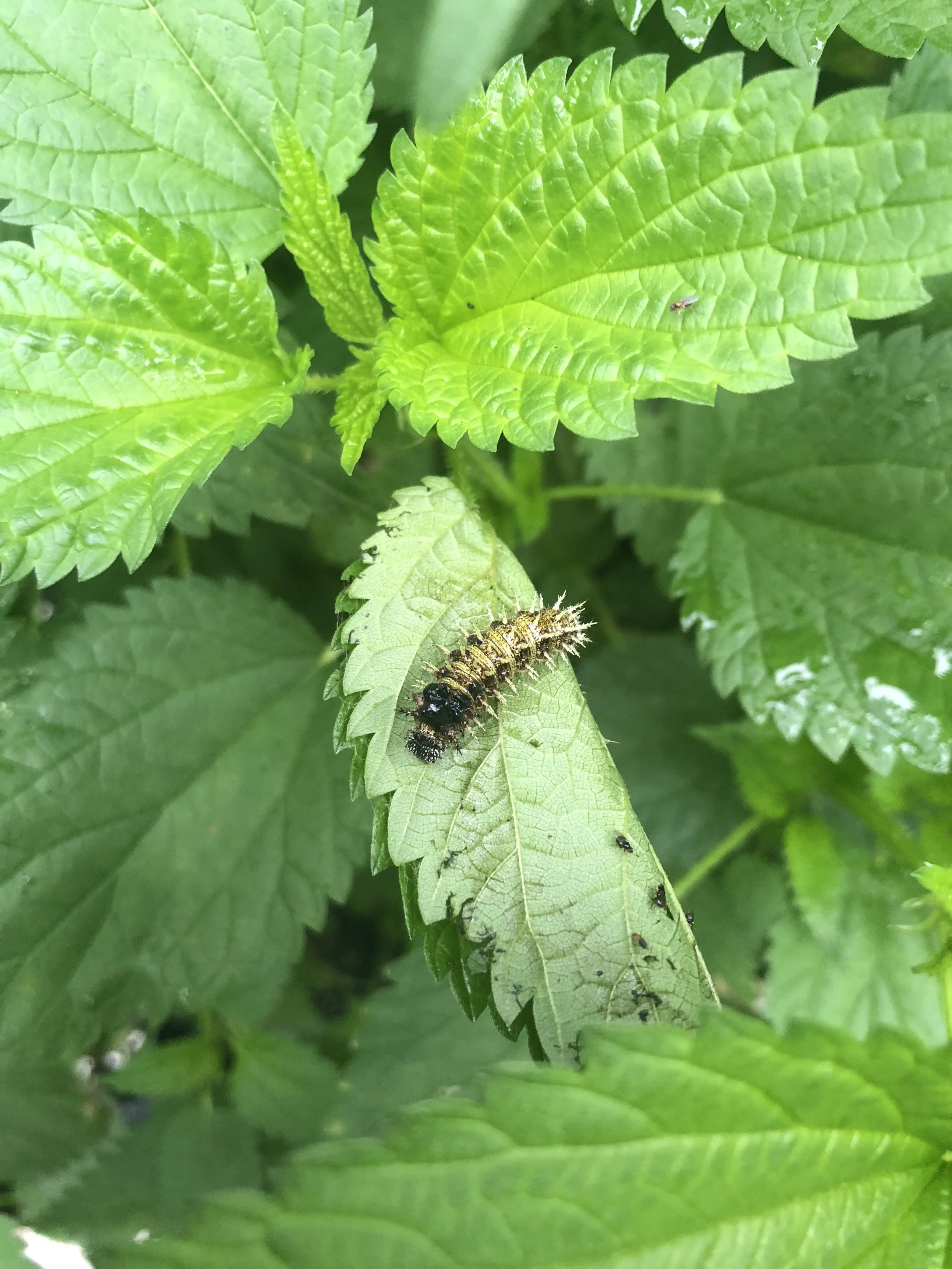
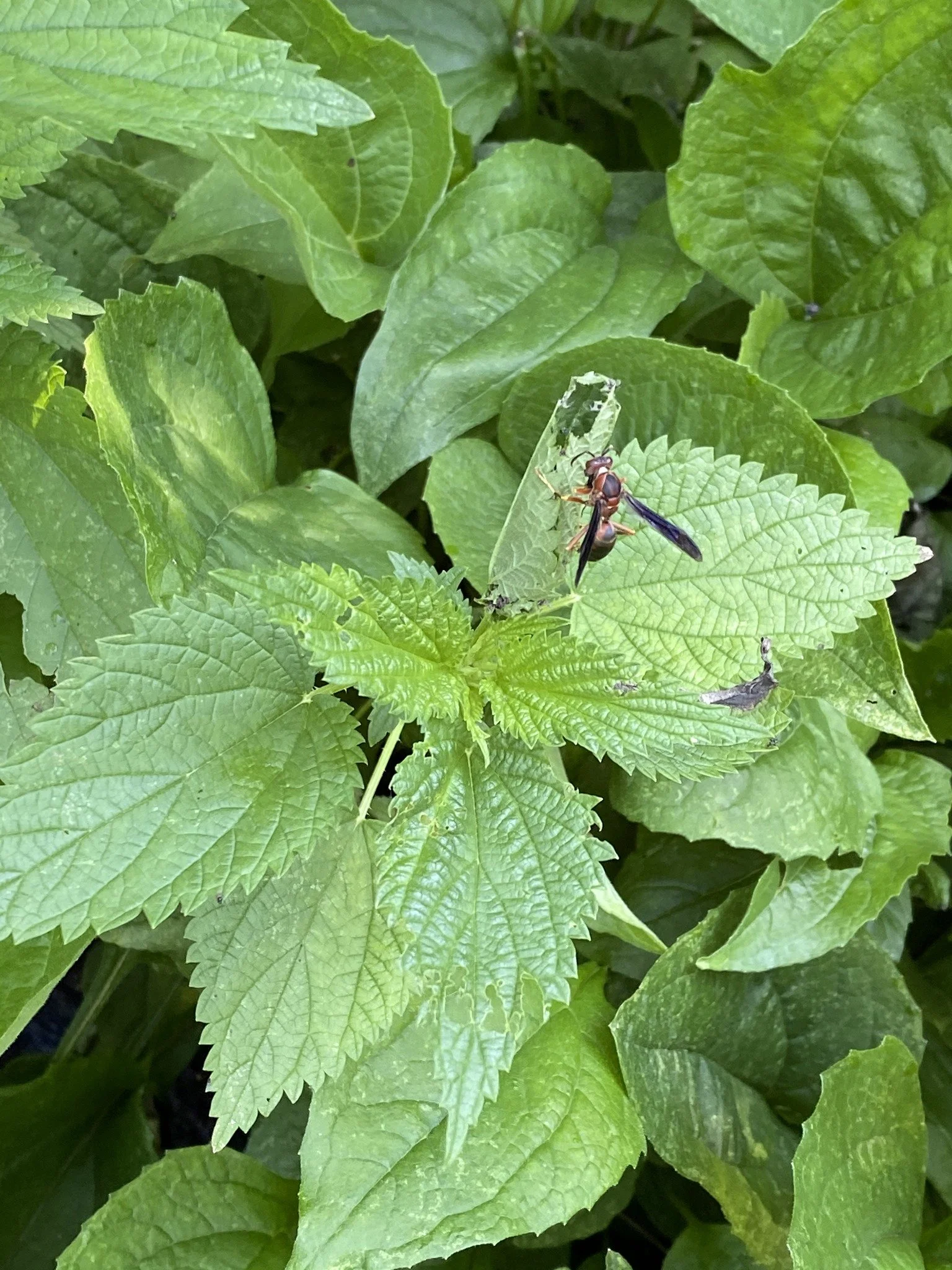
Picture 1 (Above): Painted Ladies are another butterfly species that favors Slender Nettle as a host plant.
Picture 2 (Above): A Painted Lady Caterpillar works on consuming Slender Nettle.
Picture 3 (Above): A paper wasp explores this folded leaf on Slender Nettle (Urtica gracilis). It has learned that caterpillars often hide themselves in curled leaves. Eventually the wasp was successful in finding the caterpillar. You can see the hole it chewed through the nettle leaf directly above his head. Slender Nettle attracts so many insects that you can see vegetation consuming insects interplay with insect predators throughout the day.
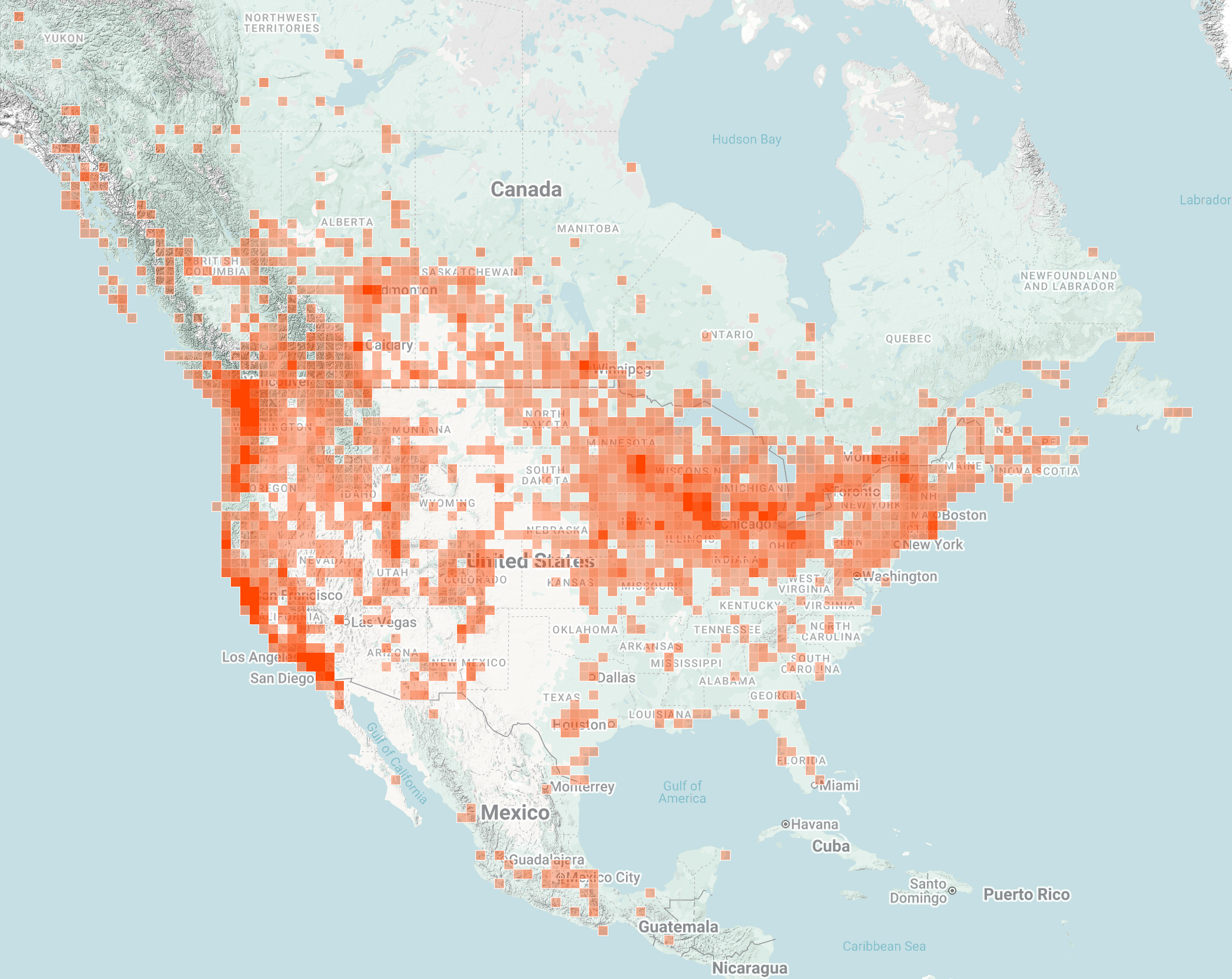
Native Range
Inaturalist participants have recorded Slender Nettle as occurring throughout United States, Canada and more sparsely recorded in Mexico. This species of nettle; Urtica gracilis, does not have an applicable Bonap native range map because it was long treated as a sub species of Urtica dioica - European Stinging Nettle. As of now Inaturalist recordings represent the projection of a native range map for Slender Nettle.
Germination
If you’re lucky enough to happen upon a Slender Nettle Patch, you can return in early to mid fall to retrieve the seeds from the tops of the plants. They’ll be clinging to strands of old flowers. You can either directly seed them in the fall if your area is already clear for them - or you can let them dry outdoors in the shade for a couple of days. and the store them in a sandwich bag in the fridge for the winter before sowing in the spring. They do not require cold-moist stratification, but they do benefit from cold-dry stratification which can be given through storing the seeds in the fridge over the winter.
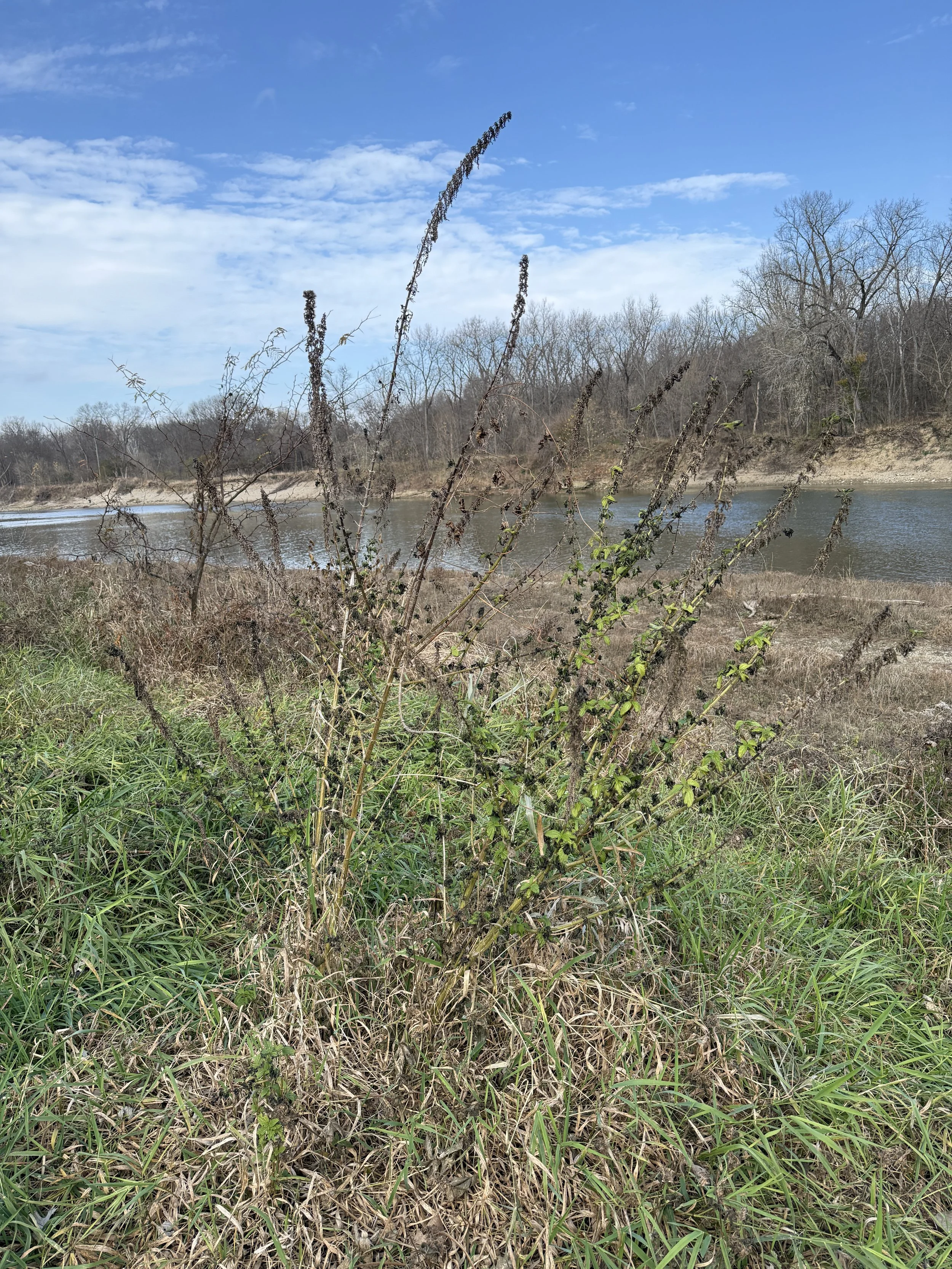
A mature slender nettle plant full of seed in the fall, growing in a disturbed area nearby a river. Sunny riversides are a common place to find Slender Nettle despite their great drought tolerance.
In conclusion; Slender Nettle deserves far more appreciation than it usually receives. It offers a rare combination of strengths: it is a native edible, a vigorous perennial, and an important host plant for many butterfly and moth species. When you collect the seeds in the fall you’ll come home with an assortment of caterpillars, beetles, and spiders that you pick up just by stripping slender nettle seeds. In a time when many landscapes are nearly biologically empty, Slender Nettle stands out as a plant that can actively restore ecological function while also offering a useful seasonal food source. For those willing to work around its sting and manage it thoughtfully, it can become one of the most rewarding native plants to grow. By making room for Slender Nettle, we are not just growing another patch of greenery—we are creating habitat, supporting native insect life, and reconnecting with a plant that has both ecological and practical value.